Viewing entries tagged
Fall 2025

Road to Hope (Fall 2025)

Comment

Road to Hope (Fall 2025)

Project Background

Globally, the number of youth caregivers is unknown. In the US alone, however, an estimated 1.6 million young people care for loved ones.  Given the burden of HIV and other chronic illnesses in global majority settings, this number is expected to be much higher in other locations across the world. 

Research from the HIV epidemic has shown that caregiving at a young age places immense stress on children or adolescents. In low-resource settings, these young caregivers are often forced to give up their education. Furthermore, they face a greater risk of exposure to poverty and community violence. The Hidden Toll of Care Giving on Youth Care Givers 

According to the WHO Palliative Care, palliative care is a supportive approach that aims to prevent and relieve health-related suffering of adults, children, and their families facing problems associated with life-threatening illness. It is based on a comprehensive and person-centered approach, addressing physical, psychological, social, and spiritual suffering. This includes socioeconomic support for patients and families who are often among the poorest in the community due to challenges in earning income, given their serious illness.

In Uganda, palliative care patients reported that their most significant concerns were not physical pain, but rather the distress of knowing their children would be left without support and would likely have to drop out of school with no hope for the future. Palliative care nurses raised the need to address this suffering among their patients and their families.

Definition of Success

The Spring 2026 project offers a Notre Dame student team the opportunity to conduct a structured, policy-oriented analysis of CES’s transition toward greater organizational independence. The project will examine available legal frameworks, financing structures, and governance arrangements to establish a new legal and fiscal representation in the United States to support its work in Mexico. The project hopes to explore options for establishing support for international mechanisms, particularly in the US, that will best support long-term organizational survival and effectiveness.

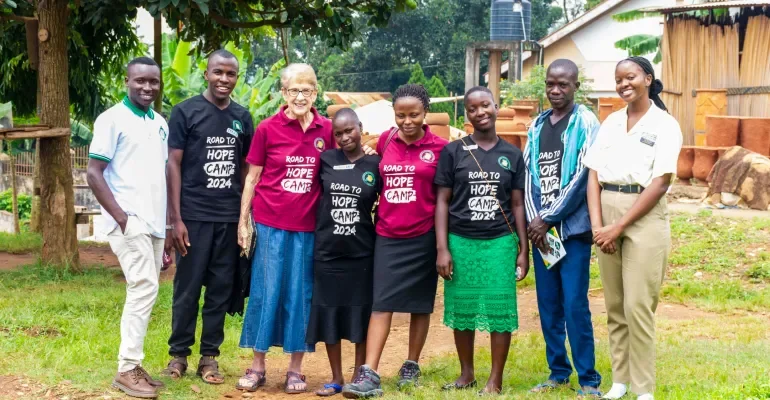
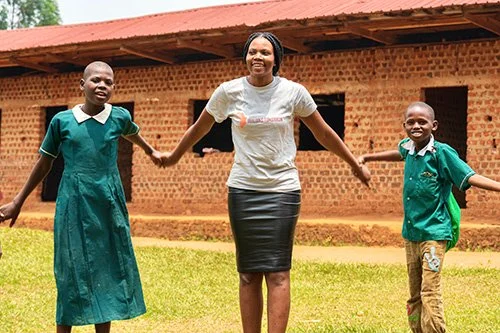
Road to Hope Program: In response, the Palliative Care Association of Uganda (PCAU) launched the Road to Hope (RTH) Program in 2012, in partnership with the Center for Hospice Care (USA). This education-focused program supports young caregivers from impoverished backgrounds so they can remain in school while caring for chronically ill parents. The children are identified in collaboration with palliative care practitioners in the community, enrolled in appropriate schools, and supported with school fees and requirements, medical care, psychosocial, spiritual, and child protection services. 

Integrating social and economic interventions in palliative care programming is important in addressing inequalities and exclusion of indigent families and can greatly contribute to better access to health care services while also acting as a tool for poverty alleviation, especially across generations.

Definition of Opportunity

Global Partners in Care and the Palliative Care Association of Uganda aim to evaluate the Road to Hope Program to identify best practices, enabling the global expansion of support for child caregivers. While assessing this work, please identify the key factors of this program that should be highlighted for palliative care organizations considering implementation in other contexts, and develop a framework for creating programs for child caregivers. Furthermore, identify possible funding sources that could be used to fund such programs across the world.
Final Deliverables

Comment

Building Tomorrow (Fall 2025)

Comment

Building Tomorrow (Fall 2025)

Project Background

Building Tomorrow (BT) is a leading education NGO in Uganda and Rwanda, dedicated to enrolling out-of-school children and helping marginalized primary students master the basic academic skills they need to thrive. At the heart of BT’s work is Roots to Rise—a proven model of short, targeted learning camps that close skill gaps in literacy and numeracy. This “Teaching at the Right Level” (TaRL) approach has been shown across the globe to dramatically improve learning outcomes, giving children the foundation for lifelong learning and opportunity.

BT delivers Roots to Rise through an innovative Fellowship program, recruiting top Ugandan college graduates for two years of service. Each Fellow works with four schools, training teachers and mobilizing Community Education Volunteers (CEVs) to run learning camps both in schools and in villages. Over two years, a Fellow and their team can run more than a hundred camps—helping hundreds of children get back on track.

The model works. But recent analysis revealed something striking: not all schools and communities are receiving the same number of camps. Some deliver the full program, others far fewer. And this matters—because when dosage drops, so does impact. Closing this gap could unlock significantly greater learning gains across thousands of children.

Definition of Success

The Spring 2026 project offers a Notre Dame student team the opportunity to conduct a structured, policy-oriented analysis of CES’s transition toward greater organizational independence. The project will examine available legal frameworks, financing structures, and governance arrangements to establish a new legal and fiscal representation in the United States to support its work in Mexico. The project hopes to explore options for establishing support for international mechanisms, particularly in the US, that will best support long-term organizational survival and effectiveness.

Definition of Opportunity

This project zeroes in on a critical organizational challenge: Why is there so much variation in camp delivery? And how can BT ensure that every child, no matter where they live, receives the full benefit of the program?

Working in partnership with BT and Notre Dame faculty, the student team will contribute to a mixed-methods study to:

  • Analyze BT’s rich monitoring and survey data

  • Conduct interviews with former Fellows and BT stakeholders

  • Identify barriers and enablers that explain why some schools run more camps than others

  • Co-develop recommendations to improve consistency and maximize impact

The findings will directly shape BT’s program design and strategy—helping ensure thousands more children across East Africa learn the foundational skills they need to be successful in school and life.

Final Deliverables

Comment

Our Kids of South Bend (Fall 2025)

Comment

Our Kids of South Bend (Fall 2025)

Partner Background

Our Kids of South Bend is a new nonprofit with a bold mission: to work from cradle to career so that every child in our community has the support they need to thrive. We begin in the Near Northwest Neighborhood (Census Tract 6), one of South Bend’s most challenged yet resilient communities.

Our Kids will serve as the backbone organization for child and family well-being—coordinating services, breaking down barriers to access, and ensuring no child falls through the cracks. We will connect families to existing partners, hold systems accountable for delivery, and, when necessary, directly provide high-impact services. Our approach is simple but ambitious: saturate support in one neighborhood until every child is on track for success, and then scale.

The need is urgent. Children in South Bend face:

  • Adverse childhood experiences at rates higher than the national average.

  • Chronic absenteeism  – 37% in South Bend Community School Corporation (SBCSC) schools.

  • Low academic achievement – 77.8% below reading proficiency; 81.2% below math proficiency.

  • Rising youth violence, now the leading cause of death for young people nationwide.

Our aim is nothing less than to break the cycle of intergenerational poverty and build a replicable model that proves what’s possible when an entire community commits to its children.

Our Kids draws inspiration from global and local innovators –  India’s ASPIRE, and the work of similar organizations in the U.S., such as the Harlem Children’s Zone.  Our pilot launches in 2026, proving the model in the Near Northwest Neighborhood before expanding citywide and perhaps beyond. Planning for the launch of Our Kids SBN is being led by Dr. Andrew Hoyt, Founding Head of School at the Portage School of Leaders, an innovative, competency-based charter high school in South Bend radically committed to students’ authentic engagement in deeper learning and positive adult relationships; Alec Torigian, National Coordinator for ACE's Pursuing Achievement Through Higher Education (PATH) initiative, whose mission is to provide radical accompaniment, opportunity, and formation on scholars' journeys from 6th grade through college graduation; and Jeffonia Jones, Family Engagement Specialist at the Portage School of Leaders, a certified life coach responsible for connecting students and families with the tools, resources, and support they’ll need to reach their fullest potential.


Definition of Opportunity

Our Kids South Bend wants to conduct a thorough analysis of the strategic partners in and/or accessible to the children and families of the NNW neighborhood for its comprehensive neighborhood saturation model of cradle to career child support services with universal coverage of at-risk children. 

Key objectives of the team will be to:

  1. Conduct a community asset mapping of likely partners, their capacity for expansion (with and without additional financing), their services, prospects for collaboration, and projected gaps in service accessibility, including all ECD centers.

  2. Synthesize lessons from ASPIRE in India, the Harlem Children’s Zone, and the Promise Neighborhood initiatives for Our Kids SBN, for example, concerning staffing ratios and models, financing models, systems and tools, and processes for initial community survey and program launch.

  3. Gather additional demographic information from census data and other public databases on the needs and social determinants of education in the neighborhood. 

Meet the Team

Final Deliverable

Comment

The Vines (Fall 2025)

Comment

The Vines (Fall 2025)

Partner Background

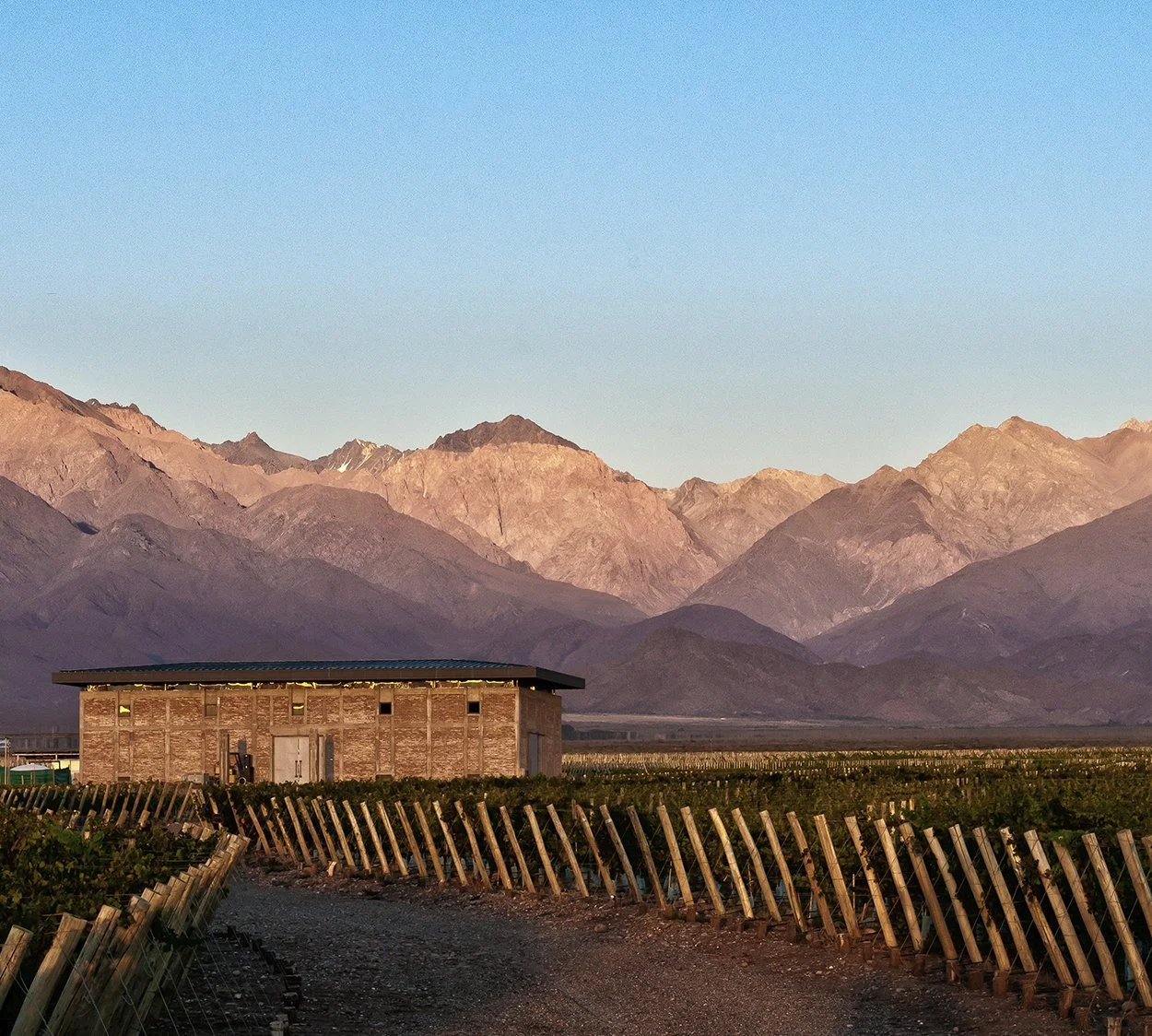
The Vines Foundation (TVF) is a catalyst for positive change in Tunuyán, a city in the western province of Mendoza, Argentina. Tunuyán is located in the Uco Valley, a largely rural region that is known for its wine and other agricultural products. We are a dedicated partner who supports sustainable initiatives that improve the overall health and vibrancy of the Tunuyán community. TVF is the philanthropic arm of The Vines, an Argentine farming, winemaking and hospitality company with deep connections to international resources through our clients in the US, Europe and Brazil. TVF leverages these resources to meet the immediate and long-term needs and aspirations of the local community through enhancing holistic community health, improving food security, and promoting sustainable livelihoods. Through our work, we engage community members, public, and private sector partners to solve complex challenges.


Definition of Opportunity

TVF is currently working to build a community center in Tunuyán. While the center will serve as a hub for all of our programming, its primary feature will be a vocational (trade) school. The school will focus on helping aspiring professionals develop the skills necessary to secure stable (year-round) jobs, particularly in the hospitality, tourism, and gastronomic industries. 

Why a vocational school? Tunuyán is a dry and dusty region of the Uco Valley with an agriculture-based industry that has been particularly impacted by climate change. Irregular rainfall and volatility between cold and extreme heat, combined with insufficient infrastructure and production facilities to promote rural development, have caused economic uncertainty to skyrocket. Like many industries in Argentina, the agricultural sector experiences high rates of informality. Laborers often lack workers’ protection and access to social security, and face volatile labor demand due to the seasonal nature of agricultural work. Around 40 percent of Tunuyán’s 55,000 residents live in poverty.

This vocational center hopes to create long-term stability through stable employment. Through extensive research (including from ND students!) and community surveys, we have concluded that a vocational school is the best way for our foundation to invest in the sustainable development of Tunuyán. Our ability to leverage the resources and knowledge of The Vines’ hospitality, gastronomy, and agricultural expertise will allow us to build out an effective program that enables young professionals to secure positions promising a sustainable income and a stable future. Our connections to other restaurants, hotels, and wineries in the region, as well as local universities and technical authorities, will ensure we are tuned in to the changing needs of the industries we seek to place our graduates in.

For the Uco Valley community, these programs represent an opportunity for economic development by creating a skilled workforce that can support and attract businesses in the hospitality industry. For the students, these programs provide a path to financial stability, career advancement, and personal growth, including essential life skills like teamwork, communication, and problem-solving. By improving the well-being of individuals, we aim to foster a thriving and dynamic community.

Vision of Success

Through this partnership, we hope to be better equipped to begin with the end in mind. 1) We can define the core elements of the vocational school that we can articulate to the local community (and potential students) as well as internationally (potential donors).    2) We have successful models we can draw inspiration from, and ideas of how we might adapt them for Tunuyán.   3) We have a proposed structure for the courses, and a reason for choosing this structure.  4) We have a clear direction for evaluating the development and measuring the success of the vocational school (impact evaluation/KPIs). 5) We can build an internal process to ensure our efforts are consistently contributing to our goals. 

Meet the Team

Final Deliverable

Comment